Before representing people injured in car accidents, Matt Bass was often the person sitting with their families at the hospital. That experience still shapes how he listens, communicates, and practices law today.
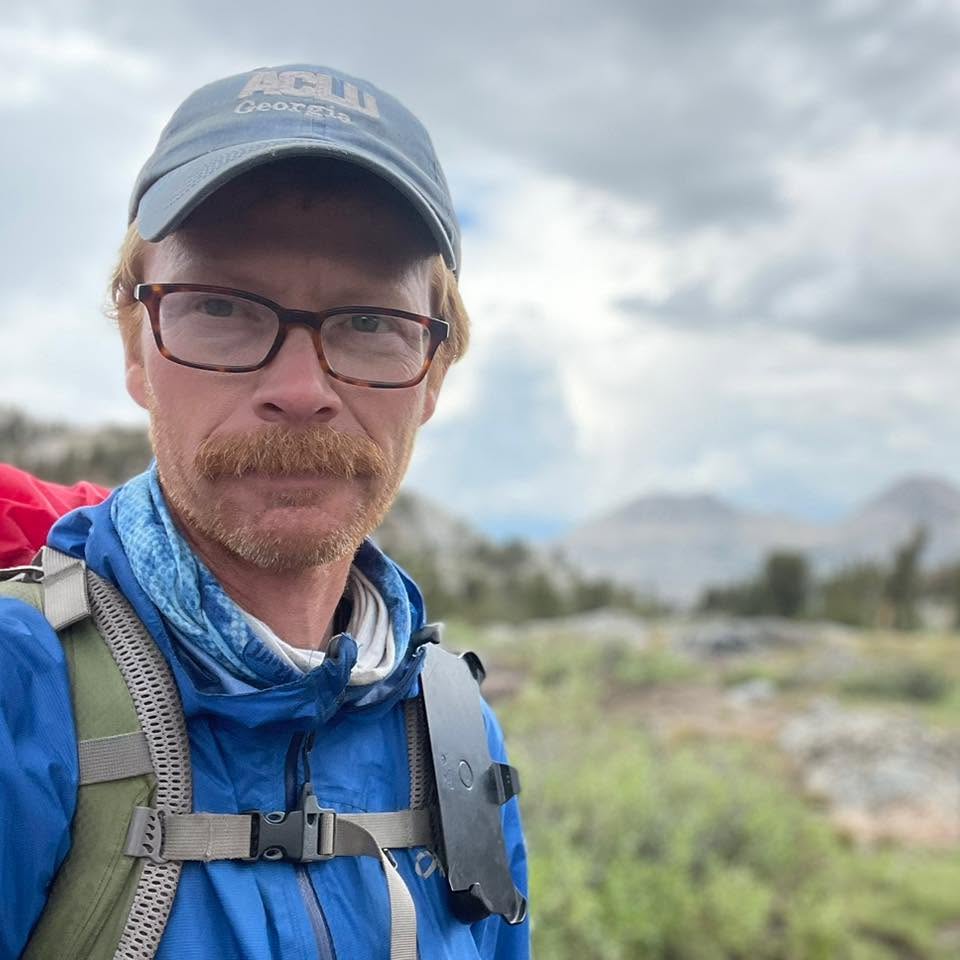
Attorney Matt Bass joins Jade in Episode 9 of the AICA Podcast for a conversation about the experiences that brought him to personal injury law. From working in radio to serving as a hospital chaplain and hiking thousands of miles, his background gives him plenty of stories to share and a clear sense of how he wants to serve his clients.
As a chaplain, Matt sometimes had the difficult responsibility of calling family members and asking them to come to the emergency room. He saw how quickly an accident could interrupt someone’s life. When a person contacts Bass Legal today, he starts by asking how they’re doing and listening to what they need.
His years in radio helped shape another priority: keeping people informed. Matt began as an on-air personality before moving into journalism and becoming an assistant news director. He talks about carrying those communication skills into his practice, where returning calls and explaining the next steps can help clients feel less uncertain about their cases.
The episode takes an unexpected turn when Matt describes stepping away from new legal work during the pandemic. Starting in 2021, he spent several years hiking, covering approximately 10,000 miles across trails that included the Pacific Crest Trail, Arizona Trail, and Appalachian Trail. The distance was significant, but the lesson he brought back was simple. Reaching a destination means continuing to take the next step.
Matt sees a connection between that experience and the patience required after an injury. Recovery and a legal case can both feel overwhelming at the beginning. He discusses helping clients work through the process while encouraging them to ask their medical providers questions and communicate concerns about their treatment.
His time on the trail also produced one of the episode’s most memorable stories. While continuing to handle an existing case, Matt needed cell service to participate in a hearing. He timed his climb up Mount Whitney so he could connect by phone, giving him a chance to tell his client afterward that he had literally climbed a mountain for them.
Closer to home, Matt’s interest in helping people extends to transportation and public safety. He shares his experience getting around by bicycle and explains why he advocates for public transit and Beltline rail in Atlanta. Preventing accidents matters to him alongside representing the people affected by them.
Across these different chapters of his life, Matt returns to the value of being available and following through. His conversation with Jade offers a personal look at the experiences behind that approach and the lessons he continues to bring into his work.
Watch Episode 9 of the AICA Podcast below for the full conversation with Matt Bass.
Watch the Podcast:
Listen to the Recording:
Read the Full Transcript
Jade (00:15): Hey everybody, this is Jade with AICA. And today on the AICA podcast we have attorney Matt Bass. Matt Bass has a non traditional start into the industry, but with loads of today we’re going to get some time to know him and learn about him and how he takes all of his experience and uses it today in his practice. Welcome, Matt.
Matt Bass (00:40): Hey, Jade. Nice to see you again.
Jade (00:42): Yes, it’s a pleasure. It’s a pleasure. So me and Matt had a chance to go to lunch a few months back and I was really impressed with his multitude of experience and his background. And today, you know, I want to share with our audience how you use and leverage your past and previous experience in your current practice. So to get started, tell little bit about yourself, your background, some of your hobbies and whatever else you want to share.
Matt Bass (01:10): Well, thanks for asking, Jade. Yeah, my background, I guess I’m a Texan for those we’re here in Georgia mainly, but I am a Texan. I grew up in the Dallas Fort Worth area. From there I went to business school, then off to seminary to be a minister and then ultimately went into law, which is where we are now. And I’m very happy to be here. Yeah, my path was probably a lot less traditional than a lot of folks. When I went to law school, I was by far the oldest law student to there. A lot of these folks don’t have experience until they become lawyers. And there’s nothing wrong with that, certainly. But I really appreciated having some experience under my belt in other fields before coming to this.
Matt Bass (01:59): So before being a lawyer again, I think I mentioned I was a minister for many years doing work like hospital chaplaincy, visiting folks, you know, in all sorts of situations, performing their marriages.
Jade (02:15): Wow.
Matt Bass (02:16): It was, you know, a serious responsibility and you get to help a lot of people in that profession. But one of the things that that taught me, especially the experience as a hospital chaplain, is that car wrecks can be incredibly traumatic. As a hospital chaplain, I found myself having to call family members and say, you know, come to the er. You know, I couldn’t tell them a lot of details about their case, their family member, but it was my job to really be with people in those triadic moments. And that’s something that I feel really privileged to have experienced because when I come to this profession, we’re also dealing with people in some of the most traumatic moments. You know, a car wreck.
Matt Bass (03:00): We hear about those all the Time, we don’t think about the fact fact that they’re traumatic, but they can be life changing even if you don’t die. Especially if you don’t die. Right. I mean, if you break an arm or something like that, and it affects your ability to move. So, yeah, that’s one of the things we bring to Bass Legal now is, you know, an emphasis on being with people in these moments to help them navigate what is definitely a traumatic experience for a lot of folks.
Jade (03:26): Yeah. So I know you use a high level of compassion with that previous experience. And just like you said, car accidents can be very traumatizing. People suffer with that ptsd. You know, vehicles are how we get around. You know, in Atlanta, unfortunately, you really need a vehicle. You can’t rely on public transportation. And sometimes this affects people’s livelihood and their ability to get to work. So a level of empathy and understanding and compassion truly goes a long way. I also know that you previously worked in radio. You want to tell us a little bit about that fun fact about yourself?
Matt Bass (04:04): Well, as we record Today, it is 9:25, which has been declared, I think, pretty much nationwide, a day of celebration for the famous Dolly Parton. So all morning long, I’ve been listening to the Dolly Parton station. Old country music. Yeah, I started off in radio. It was a great experience. Did that for two years. First is on air talent talking to people about the music. But then I went into the news side of things too, and became a journalist and was assistant, ultimately assistant news director for the radio station I worked with. It’s a real privilege, right, to do stuff like that. You were a voice for the public. People would come up to me on the street and talk to me about the news.
Matt Bass (04:46): So they really rely on things, you know, your ability to communicate. And this is actually something that I tie directly into my law practice. Now, one of the things I have noticed about lawyers, if you open up the. The professional guide for lawyers, there’s a list in the back of all the lawyers who do bad things. And the thing that clients complain about with lawyers most of all is that they don’t communicate. They just don’t talk to people about their cases. And that’s something we definitely do. At Bass Legal, it is our. Our goal to talk to everybody immediately. If we can answer the phone immediately and within 24 hours to respond. But coming back to the radio. Right. That.
Matt Bass (05:29): That experience with how important communication is for people is something we really try to emphasize here at Bass Legal. And, you know, we got lots of former client, we Got lots of clients who were former clients of other attorneys because those attorneys didn’t return their phone calls. I have no reason to think those attorneys are bad. But if you’re not talking to the client, they’re naturally going to be upset. So it’s really important for us to, as you mentioned earlier, bring compassion to the process, but also a lot of communication.
Jade (06:01): Absolutely. Out of curiosity, let’s say a new client is coming to you. What does that initial conversation look like for someone who’s new, never been involved in a car accident? What’s your position? What’s your firm’s take? How do you make that person feel comfortable with your representation?
Matt Bass (06:17): Right, right. Well, the first thing is compassion. Honestly, you call us, we’re going to ask you how you’re doing. It’s really important to us that you get healed, not that you just get compensated. Of course, we certainly want to fight for that, but we also want to make sure your medical care is taken care of, that is paid for. We want to make sure you get what you need and that we can get you back to normal as much as possible and of course, compensate you for your pain and suffering, waste of time, your medical bills, all of those sorts of things.
Jade (06:49): As I’m looking at my fact sheet here, I wanted to dive into some of your previous law experience. Something that kind of fascinates me is you represented victims of Ponzi schemes. Can you tell us a little bit more about that? I know, I mean, I’m sure they still go on. I know there was a time where it was really prevalent. There was lots of people, and I think even a little bit during COVID that kind of resurfaced. So give us some more information about that, what that day to day looked like for you and if any of.
Matt Bass (07:17): That experience you use today, well, definitely use the experience. You know, as mentioned, I came on a non traditional path to law, but then I came to personal injury a little later in my law practice. So a big chunk of my law practice was dedicated to all sorts of other clients who, you know, need compassion and help in their situation. So I started off in securities litigation. So this is any sort of thing that touches Wall Street. If you are a broker, dealer, selling securities and somebody has a complaint against you or a claim, you know, I would sue you. And so you asked about Ponzi schemes. I guess a couple of things.
Matt Bass (07:59): One, most of the news you see about Ponzi schemes, often these aren’t exactly Ponzi schemes, but they are massive frauds that people perpetuate on. On victims. And it certainly was my privilege to fight on behalf of those people and win most of those cases. I guess here’s something I would say about Ponzi schemes. If people can steal money from you, they will. It’s that simple. And this is actually true of insurance companies, too. I mean, they’re in the business. I don’ paid everybody in an insurance company, but the business is set up to take your money on your premiums and to deny your claims. Right. They make money by not helping you. Right.
Matt Bass (08:42): And so this is an experience I’ve experienced with really wealthy people running Ponzi schemes is that they find ways to take your money and they, of course, never want to give it back. And that, that riles me up. I mean, it’s just wrong to take from people. Theft and fraud is, is, is. It’s criminal behavior. And I hate bullies, and those kinds need to pay. So when it comes to insurance companies, this has been my experience too, and I fought with a lot of insurance companies over other kinds of insurance policies before coming to the personal injury space. But the experience is universal. You have to fight with them. You have to fight with them to get what you deserve.
Matt Bass (09:21): So that’s what I would say about my Ponzi scheme experience, is that I have witnessed a lot of fraud, and I’m ready to fight those who would try to keep you from getting what you deserve.
Jade (09:32): So take me through your journey to personal injury. We know you didn’t start off specifically in that space, so talk about some of your other experience, some of your other industry experience in the law field and what you would do in those circumstances, how you represented your clients.
Matt Bass (09:49): Well, we all see lawyer ads on billboards and on tv, and frankly, they’re obnoxious. And that actually drove me away from personal injury as a lawyer for a while. I was just like, these guys are all. And sometimes women are very smarmy.
Jade (10:07): Cheesy.
Matt Bass (10:08): Cheesy, yeah. They don’t seem like serious folks sometimes, and I think that’s unfortunate because they are serious folks. But, you know, because of advertising, everyone focuses on, you know, the big payout. And to be clear, I want people to get the biggest payout ever. Right. I mean, I make more money if I make you more compensation. Right.
Jade (10:29): But.
Matt Bass (10:29): But it’s more than that. It’s about healing you. It’s about compensating you. It’s about making sure those who are wrong pay for the damage that they. They cause. Right. So in my profession, I did all these other areas of law. And at some point, I got sick of it because I didn’t really like defending really rich people. I just, I really didn’t. They didn’t need me. And. And covet hit, right? And Covid. I don’t think people use the word trauma enough, but the whole experience of COVID for everybody caused trauma in one way or another. Some people went crazy in one way or another. Some people got, you know, picked up skills and good habits and maybe learned to play the guitar.
Matt Bass (11:12): But it radically changed people’s lives. And for me, I was sick of the law. So I quit. I had a few cases going. You can never really quit those. So I kept showing up to those cases, but I really just stopped taking new cases and focused on the handful of cases I had. And I decided to go walk. And so I went and hiked the Pacific Crest Trail, and there was a big movie that came out about. I, I forget, maybe Reese Witherspoon was in it about hiking on the Pacific Crest Trail. And I. I just decided, let’s do it. So I sold everything I had, stopped taking cases. You know, I paid my bar dues so I could keep being a lawyer in the future, maybe.
Matt Bass (11:52): And I started walking, and that was in 2021. And then for four years, I kept walking. I. I took some breaks, but I ended up walking about 10, 000 miles.
Jade (12:01): Fresh trail.
Matt Bass (12:03): Yeah, it was. It’s the Arizona Trail and the Appalachian Trail. And you say wow. And yeah, it’s kind of wow. I mean, I. I should pat myself on the back for that. It’s a big deal. But one of the big lessons it taught me, which is true of everything, it really applies to everything, and that’s that the only way to get to the end of a hike is to take one step at a time. And that’s true of everything. That’s going to be true of your wellness journey after an injury, for example. Right. You may be seriously injured, but the fact is you can heal one day at a time, One doctor visit at a time, One doing what the doctor said at the time at a time,.
Jade (12:41): Emphasis on what the doctor said.
Matt Bass (12:44): And asking your doctor questions, too. You got to be informed. And if the, if the therapy you’re receiving right now isn’t helping as much as it should, you should certainly talk to them about that. Right? So, you know, it’s all one step at a time, though, right? So that’s one of the things I love about this, is I know how to take those steps from start to end on somebody’s Personal injury case. I’ll be there with you taking your phone call. At the beginning, I’ll work with you to make sure you get the health care you need and that. That healthcare gets paid for. I’ll fight with the bullies at the insurance company who, again, only exist to take your money. They don’t exist to pay you.
Matt Bass (13:22): And then if I have to go to litigation, I’ll carry it through that as well. I’ve certainly done plenty of court cases. I know how to sue people very well.
Jade (13:32): Right. And. And communicate.
Matt Bass (13:36): And that’s the thing, though, and I appreciate you saying that, but, you know, my goal is to communicate why you don’t. Why you don’t want me to sue you too. Right. So that’s why a lot of these cases settle, because I come to the end of it, and I’m like, look, you got one choice. You either pay up or you pay more, you know, in legal fees later to only pay the same bill.
Jade (13:54): Right.
Matt Bass (13:56): So, yeah. What has that taught me? What did that journey teach me? One step at a time. We can get you through this sort of stuff. As overwhelming as the whole process may seem, as far off as the destination may appear, you’ll get there, and I’ll help you do it.
Jade (14:11): I love that you put a lot of emphasis on healing and making sure that, you know, first and foremost, of course, you want to get the patient compensated, but you also are extremely invested in their healing, being, of course, on the medical side. But I’ve been in personal injury for 10 years now. Of course, when I view patients or their charts, we have the same focus. We want to make sure that they’re getting the healing that they deserve, that they can get to the appointments, whether that’s providing them transportation or maybe helping them understand some of the procedures, because, you know, it could be a little intimidating. Some of these words are Latin. None of us are medical doctors.
Jade (14:49): So being able to find a person who can really explain what’s happening, what they’re experiencing, that can really be compassion. And understanding on our side also is extremely important. With that being said, I think there’s a big misconception that your medical bills or the longer you treat takes away from how much you earn. Of course, we know that there’s policy limits and all these other things that are really, you know, determine what you can be compensated for. But what would you tell those patients or potential clients who maybe don’t want an attorney or don’t want to treat and get those interventional spine procedures because they feel like it’s going to lessen what they get in their pockets.
Matt Bass (15:30): Well, again, I got to start with the first thing. Your healing matters more than anything. Your ability to move and live and lift an arm or walk or whatever it may be has to be your first focus always. So get the medical treatment you need, regardless of any perceptions about how much it’s going to cost you. And the reason why I would say that is because, you know, we’re able to work with folks like, like you guys at AICA to make sure that these people can afford their medical care. So, you know, the perception that more medical care means you get less compensation, I mean, maybe I can’t predict that.
Matt Bass (16:09): That’s, you know, always false, but largely it is false because often people get a value out of their medical care that far exceeds what they would get if they paid for it in another way. So the fact is, is if you’re dealing with insurance, sorry, if you’re dealing with an attorney like me, we’re going to make sure those bills are paid. We’re going to do what we can to maximize your compensation. And of course, I’ve got a personal interest in this, right? I mean, attorneys make money off of helping you maximize that compensation. I hope I’ve been clear. I’ve got multiple motives, right? I mean, my main motive here is to help people. I love doing that, that I also have to pay for retirement, right?
Matt Bass (16:52): I took four years off, and, and, and the fact is I’m going to have to pay my bills just like any other human would need to, right? So I have multiple motivations, the main one to help you, but my interests are directly tied to yours, right? So, you know, you hire an attorney like me, and this should be true of any attorney you hire. I don’t know if it’s always the case it comes down to the individual attorney, but they have an obligation to fight for you. Now, I might be on AIC’s A’s podcast today, but, you know, I represent the client ultimately, and I represent you. You know, as much as I dislike insurance as a whole system, it’s not just the clients I’m going to communicate with quickly.
Matt Bass (17:35): It’s going to be their medical providers, because there’s important information that the medical providers may have. It’s going to be the insurance companies because, you know, honestly, multiple motives, right? Part of this is just showing respect for other humans and responding when they call. But another thing is to move quickly. So averages of these cases is a question a lot of people have. How long does it take? And a Chunk of that is obviously tied to how long does your medical care take.
Jade (18:04): Right.
Matt Bass (18:06): And then there’s a whole process of negotiation which will take a few months. We’ve been able to, and I don’t know if this comes down to us or a lot of things. I think it may come down to a lot of things. We’ve been able to keep our process under six months. It’s usually a six to eight month process for people. And I think that’s a couple of things. One, we just move fast. We don’t waste time. Number two, I would say has to be that communication thing we’re talking about. There’s a lot of wasted time between when somebody stops treating and when their lawyer gets started demanding on the case. So we do what we can to crunch that down.
Matt Bass (18:46): I, we constantly keep up with our providers and our clients to make sure that the day they stop treating, we know about it. So we can stop wasting time there, pursue the case and move forward. There are other ways we save time at the end of the case as well by working to negotiate these settlements very. Excuse me, working to negotiate with medical providers about their bills very quickly. So to answer the question about how long should it take? Six to eight months. We can’t guarantee anything, but we’ve been able to beat that six months. And we’re really proud of that. And that’s also in part to folks that is also with the assistance of folks like AICA who are quick to provide medical bills.
Matt Bass (19:30): So it’s one of the things I do appreciate about you guys.
Jade (19:32): Absolutely. And we’re so glad that we can help you quickly resolve these claims or, you know, faster than the average. I want to touch on some of the things you do in your spare time. But on my notes here, it says this week you are at, you were at Atlanta City Council talking about the Beltline rail and its potential issues or risk that it could pose to personal injury claims. Can you give us some more details on that?
Matt Bass (19:56): Well, it was a little bit different than that. But so look, driving around in a car is a dangerous thing. We all know it. We see car accidents all the time. When you drive, you know, I drive to Chambly every day and I, I see them on, on the interstate every single day. Now, I’ve been driving my whole life, but for about 10 years there, I only rode around town on a bicycle. And I have to say it was better for my physical health, my mental health. It was less stressful. That’s not to suggest writing is always safe. If someone is Injured, and they’re a cyclist. I certainly want to help them because I have a lot of experience with this. But that being said, driving is inherently dangerous, right?
Jade (20:39): Yes.
Matt Bass (20:40): Alternatives to driving are safer for people. They really are. And healthier. So, you know, one of the things I want to see is more public transit for our city. So, yes, this week and for many months, I have been talking to our city officials about why we haven’t started one of the biggest rail projects that Atlanta has had on the books for 10 years now. And I’m proud to say this week the city council voted 14. 0 To support building the Beltline rail. So we’re very happy about that.
Jade (21:10): Oh, that’s awesome.
Matt Bass (21:11): But I went down there and I wanted to tell them my, my two cents about this build the rail. I told him. The AJC quoted me and they actually, actually lied a little. So the, the AJC quoted me. They said that. I got up and I said, hey, I’m 45 and I would like to see this before I die. I’m halfway done. I want to see this rail before I die. And I feel bad because I lied about my age. I’m actually 47. So I don’t know if I’ve compromised my credibility as somebody who advocates for the public, but.
Jade (21:46): No, no, no, no. It was, it was for a good reason. You just rounded down. We all rounded.
Matt Bass (21:53): I rounded down. I like that. And so that was one little project. But look, as a lawyer, most people. I know that most people do not know a lawyer at all. I may be the only lawyer they ever meet. So I have a commitment to all clients, all potential clients to do my best to help you find a lawyer. If I don’t do that area of law. But also as a lawyer, I think part of the commitment is to the fact that we make laws as lawyers. So I want to say in the legislative process.
Matt Bass (22:23): So every year you will see me down at the legislature arguing about one thing or another, usually related to public safety, sometimes related to criminal justice reform or criminal legal system reform, as we prefer to call it. So, yeah, and I’ll continue to advocate for people. It’ll always be something about justice, what’s, what’s good for those who, who are currently not being served. It’ll often be about public safety because. Oh, you know, I’m kind of. I know it’s kind of counter intuitive. Right. If I’m fighting for safer roads, well, then I’m eliminating potential clients. Right? Yeah, there’s. There’s some of that. But I also know there’s more than enough car accidents to go around.
Matt Bass (23:08): If I can help prevent some of these car accidents by advocating for a safer street, an alternative to driving or something else, I want to do that.
Jade (23:19): No, That’s a beautiful response. So my last question is, tell me about a standout moment in your career, Something that just this sticks out with you to you, maybe you still carry with you today. Maybe it’s a client that really maybe shaped the way you do things differently.
Matt Bass (23:38): Well, God, how many people have I represented in my life? It’s hundreds at this point. And some of the more fun ones are the ones that you don’t expect to win or you don’t know if you can win. So there’s this one time I represented about 35 background actors who weren’t being paid by a major movie production here in the city. And I had to gather all their claims, negotiate for them, get them a settlement, and collect it. And we were able to do it. And it was this tiny amount of money for each of them over all of their cases. It was a lot of money. But the producer of that movie thought they would just go away because they’re the little guy. And it just pissed me off, honestly.
Matt Bass (24:25): I was like, this person took time out of three days of their. You know, they took three days. It’s not a whole lot of money, but, like, you owe them. You need to pay. And so that whole experience, one of the things I really appreciated about it was just being able to fight and win for the little guy. That’s fun. Another experience I had, which I don’t know. I don’t know what it taught me, but it’s just kind of funny. And it was fun, and it worked for the client. So I told you I quit working law for a while and went and hiked the Pacific Crest Trail. So on the Pacific Crest Trail, right off of it is the tallest mountain in the lower 48. It’s called Mount Whitney.
Matt Bass (25:06): It’s 14, 500, and I think it was eight feet the year I was there. It actually changes and goes up, I think. Wow. And so Mount Whitney is the tallest point here in. In the lower 48, I still had some cases going. I had this doctor who had been falsely accused of stealing drugs. We were able to show that he did not do it and get his medical license back as he deserved it. Right. And he’s out there helping patients now. But the. The whole process involved litigating, and I had to go to court, but I was hiking, and so I was able to take you Know these wonderful little phones out into the wilderness with me. I had a battery pack to keep it charged, all of that.
Matt Bass (25:51): We’re out in the middle of the Sierra Nevada, one of the most remote places in North America. Well, in the United States at least. And there’s no signal. And I’m like, I gotta be at a hearing at 9am in Georgia, and I’m in California. So I decided to hike up to the top of Mount Whitney. Now, I was going up there anyway, but I was like, oh, I got to do it now, though, so I can make a phone call. So I literally hiked the tallest mountain in the lower 48 for a client so I could make a phone call and show up in court. And we had the hearing, and ultimately we won and got the results that we wanted.
Matt Bass (26:32): So that was one of the most fun experiences I had, was literally being able to climb a mountain for a client. And I told that client, you know, you better tell everybody your lawyer climbs mountains for you.
Jade (26:42): So that is amazing. What a story. Climbing a mountain to get service.
Matt Bass (26:51): I can send you photos.
Jade (26:52): No, please do. Please do. And taking the call from there. That is so wonderful to hear about your story, to hear about how you bring it all back full circle and use it to service your clients today. Of course, you know, here at AICA, we always got your back, and we’re happy to provide superior care to any future clients you send to us. We want to thank you for your time with us today. Please tell people where they can find you if they’re interested. Interested in your representation.
Matt Bass (27:18): Yes. My law firm is Bass Legal. You can actually see in the background over here, the website is BAS and then PI, not for private investigator. That’s for personal injury. So it’s B A S S P I dot com. The other option is to call us. Our phone number would be 770-817-1444. Again, 770-817-1444. And, Jade, I wanted to thank you for the opportunity to work with AICA. I think we’ve had, what, 10, 10 plus cases together now for sure. And you guys have been responsive providers. I haven’t received complaints, which is more than I can say for some other chiropractors. So I am more than happy to send clients to you when they do not have a chiropractor.
Matt Bass (28:08): And of course, we’re more than happy to represent your patients when they don’t have a lawyer yet.
Jade (28:12): Yet.
Matt Bass (28:13): So thanks for the opportunity for talking to get to talk with you today.
Jade (28:17): Thank you again for joining us this is Jade with AICA Podcast. We got your back.
(28:27): That’s it for today’s episode of the AICA Podcast. We’ll be back soon with more insights. Until then, we got your back!
Interested in Being a Guest on The AICA Podcast?
Submit your information if you are interested in being on The AICA Podcast.