Orthopedic Trauma Surgery in Atlanta
Expert Care for Fractures and Accident Injuries
AICA’s Orthopedic Trauma Surgeons
A serious accident often leaves behind a broken bone or a damaged joint that the emergency room stabilizes but doesn’t fully repair. At AICA Orthopedics, our orthopedic trauma surgeons take it from there, treating the fractures, dislocations, and complex injuries that need proper realignment and long-term recovery. We diagnose the damage with on-site imaging, repair it with the right procedure, and rehabilitate the injury so you regain full use of it. Whether your injury came from a car accident, a fall, or a high-impact collision, you can count on same-day appointments across multiple Metro Atlanta locations.
If you are facing a life-threatening emergency, severe bleeding, or a suspected head or spine injury, call 911 or go to the nearest emergency room first. AICA treats the orthopedic injuries that follow, once you are stable.
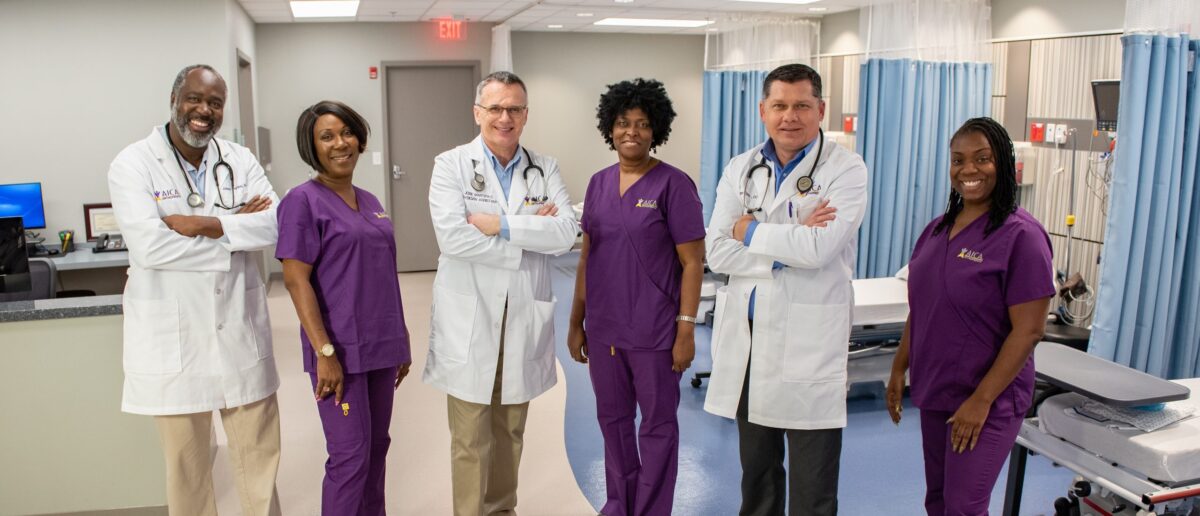
Meet AICA's Orthopedic Trauma Team
A traumatic injury rarely damages just one structure, so your care draws on several specialists working from a single plan:
- Our orthopedic trauma surgeons realign and repair fractures, dislocations, and complex bone and joint injuries.
- Our neurologists evaluate nerve damage that can follow a serious injury, from numbness and weakness to nerve pain.
- Our physical therapists rebuild the strength, motion, and function lost while the injury heals.
- Our pain management specialists keep pain controlled through what can be a demanding recovery.
Our Atlanta orthopedic doctors are board-certified surgeons and neurosurgeons, and 60+ physicians across specialties means the right expert is available without a referral elsewhere.
How Orthopedic Trauma Surgery Works
Orthopedic trauma surgery repairs serious injuries to the bones, joints, and connective tissue, usually caused by a sudden, high-force event like a car crash, a bad fall, or a sports collision. Unlike a routine fracture that heals in a cast, traumatic injuries often involve bones broken in several places, joints knocked out of position, or damage severe enough that the bone cannot heal in proper alignment on its own.
That alignment is the whole point of the repair. Setting the bone or joint back to its correct position and holding it there is what protects your long-term movement and prevents complications like arthritis, deformity, or a fracture that never fully knits. AICA’s trauma surgeons focus on getting the structure right the first time, then guiding the rehabilitation that turns a repair into a recovery.
Injuries Our Trauma Surgeons Treat
AICA’s orthopedic specialists diagnose and repair a wide range of traumatic injuries, including:
- Displaced fractures, where the broken ends of the bone have shifted out of alignment
- Comminuted fractures, where the bone has broken into several pieces
- Multiple fractures from a single high-impact accident
- Fractures involving a joint surface
- Joint dislocations and the torn ligaments that come with them
- Crush injuries to the hand, foot, or limb
- Tendon and ligament tears from a traumatic injury
- Nonunion and malunion, fractures that failed to heal or healed out of position
- Post-traumatic arthritis in a previously injured joint
When Surgery Is Necessary
Not every fracture needs an operation. A bone that is stable and still in good alignment often heals well in a cast or brace. Surgery becomes the right choice when the injury is too severe to heal correctly on its own, which usually means one of the following:
- The broken ends of the bone have shifted and won’t stay aligned without fixation
- The fracture extends into a joint, where even a small step-off changes how the joint moves
- The bone is broken in several places or the injury is open, exposing bone through the skin
- A joint is dislocated and unstable, or the surrounding ligaments are torn
- A previous fracture has failed to heal or has healed in the wrong position
When surgery is needed, moving quickly to restore alignment gives the injury its best chance to heal fully.
How AICA Diagnoses Traumatic Injuries
A precise picture of the damage drives every trauma repair, and AICA images on site, so there is no waiting on an outside facility.
X-Ray
MRI
CT Scan
EMG Testing
Non-Surgical Care When the Injury Allows
When a fracture is stable and well-aligned, surgery isn’t the answer, and we treat it without one. Conservative trauma care may include:
- Casting or bracing to hold the bone still while it heals
- Closed reduction, realigning a bone without an incision when the break allows
- Physical therapy to rebuild strength and motion as the injury heals
- Anti-inflammatory medication and pain management during recovery
When the injury is too severe for these to work, our surgeons walk you through the procedure that will repair it.
Types of Trauma Surgery AICA Performs
The procedure depends on which bone or joint is injured and how severe the damage is. Our trauma surgeons choose the approach that restores alignment with the least disruption the injury allows.
Open Reduction and Internal Fixation (ORIF)
The most common trauma procedure, ORIF repositions the broken bone fragments (open reduction) and secures them with plates, screws, rods, or pins (internal fixation) so they heal in the correct position. It’s used across the body, from wrist and ankle fractures to more complex breaks in the arm and leg.
Intramedullary Nailing
For fractures of the long bones, such as the femur or tibia, a metal rod is placed inside the hollow center of the bone to stabilize the break from within. This approach lets many patients bear weight sooner and is a mainstay of long-bone trauma repair.
External Fixation
When the injury is severe, badly swollen, or open, a frame outside the body holds the bone in position with pins through the skin. External fixation can stabilize an injury quickly, sometimes as a first step before a definitive repair once the soft tissue has settled.
Joint Dislocation Repair
A dislocated joint is repositioned, and when the surrounding ligaments are torn or the joint is unstable, surgery repairs those structures so the joint stays in place. Left untreated, an unstable joint tends to dislocate again.
Fracture Reconstruction for Nonunion and Malunion
When a fracture fails to heal (nonunion) or heals in the wrong position (malunion), reconstruction realigns the bone and encourages healing, sometimes with a bone graft to bridge the gap. This restores function to an injury that didn’t recover the first time.
Post-Traumatic Soft-Tissue Repair
Serious injuries often tear tendons and ligaments alongside the bone damage. Our surgeons repair these structures, frequently at the same time as the fracture, so the joint regains both stability and movement.
What to Expect on the Day of Surgery
Some traumatic injuries need repair quickly, while others are scheduled once the initial swelling settles or after the emergency room has stabilized you. Either way, an AICA orthopedic specialist reviews your imaging, explains what is damaged, and walks through the plan before surgery. Depending on the repair, you may be under general anesthesia or a regional block. Your surgeon explains the procedure, the recovery timeline, and the risks up front, so you know what to expect.
How to Prepare for a Scheduled Repair
When your trauma surgery is planned rather than emergent, a little preparation helps:
- Complete any required lab work and medical evaluations
- Follow instructions on which medications to pause or continue
- Arrange a ride home and help with daily tasks during early recovery
- Set up your home so essentials are easy to reach while you are less mobile
- Follow eating and drinking guidelines for the hours before surgery
Recovery After a Traumatic Injury
Recovery from a traumatic injury is usually longer than from a routine procedure, because the bone, and often the surrounding soft tissue, has more healing to do. Most plans move through protected immobilization, then a gradual return to weight and motion, then strengthening. General timelines vary widely by injury:
- A stabilized fracture in a smaller bone: several weeks to a few months
- A long-bone or weight-bearing fracture: several months
- Complex, multiple, or joint-surface injuries: longer, with staged rehabilitation
Physical therapy is central throughout. Our physical therapists guide you through exercises that rebuild strength, motion, and function while protecting the repair, and coordinate directly with your surgeon so your progress is tracked from the operating room to your last appointment.
For patients injured in an accident that wasn’t their fault, eligible care often comes with no out-of-pocket cost, because AICA bills the claim, not you.
Key Benefits for Personal Injury Patients
No Costs Out-of-Pocket
Transport Available
Doctors Available 24/7
All Imaging In-house
Same Day Appointment
Some Insurance Accepted
Se Habla Espańol
Why Atlanta Chooses AICA for Trauma Surgery
Orthopedic trauma surgeons, neurologists, physical therapists, and pain management specialists work in the same practice at AICA, so your diagnosis, surgery, and rehabilitation run as one process instead of a chain of referrals. For patients hurt in a car accident, we document the injury thoroughly for your records and your claim, which matters when a serious injury turns into a long recovery. That care is backed by more than 15,000 verified Google reviews, same-day appointments, 24/7 doctor access, and multiple Metro Atlanta locations.
Find an Orthopedic Surgeon by Specialty
See an Orthopedic Trauma Surgeon at AICA
If a fracture or accident injury is keeping you from the life you had before it, the first step is an accurate diagnosis and a clear plan to heal it correctly. If you’re looking for expert orthopedic trauma surgery near you, schedule a consultation today or call (404) 855-2141, and take the first step toward a full recovery.