Insights from Attorney Adewale Odetunde on Trucking Litigation, Case Development, and Advocating for Injured Clients | The AICA Podcast
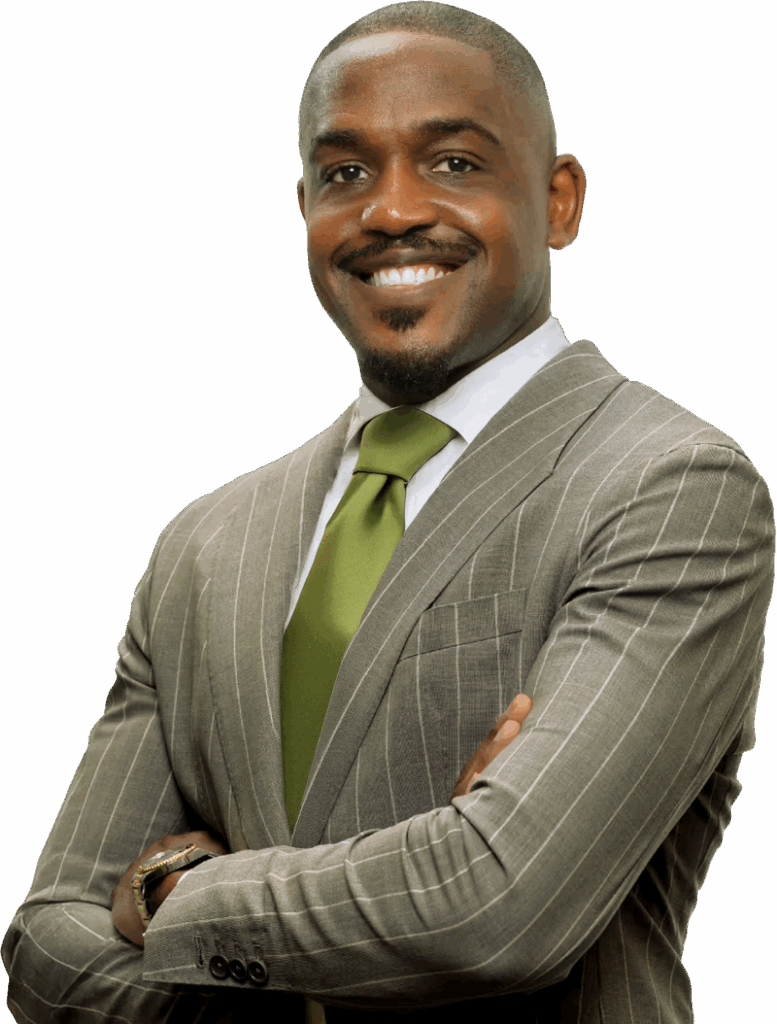
In this episode of the AICA Podcast, host Jeff Shaw talks with Attorney Adewale Odetunde, founder of Odetunde Law, about his path from SEC Triple Jump Champion to board certified truck wreck attorney and how his training, discipline, and psychology background shape his work in personal injury law.
Drawing from experiences in both civil litigation and injury work, Adewale explains how he discovered his passion for representing individuals who find themselves up against powerful insurance companies. He breaks down what makes trucking cases fundamentally different from typical motor vehicle claims, the crucial role of FMCSA data, and why overlooked evidence can dramatically change the direction of a case. He also highlights how social media can harm a client’s credibility and why guiding clients through those pitfalls is essential to protecting their case.
Adewale shares a memorable case that began as a low value claim but ultimately resulted in a multimillion dollar settlement after uncovering an undiagnosed brain injury, illustrating the importance of patience, thorough investigation, and belief in your client. He also reflects on how attorneys can adapt to Georgia’s recent tort reform without losing confidence in taking cases to trial.
Whether you are an attorney handling complex injury cases or someone interested in the realities of trucking litigation, Adewale’s perspective offers practical insight, powerful examples, and a grounded look at what effective advocacy truly requires.
Watch the Podcast:
Listen to the Recording:
Read the Full Transcript
Jeff Shaw (00:00)
Welcome to the AICA podcast. I’m Jeff. And today we’re excited to welcome on Adewale Odetunde as our guest. Adewale recently founded Odetunde Law, which specializes in truck and car wreck cases. He is a board-certified truck wreck attorney who has secured numerous seven figure settlements for his clients. His leadership roles include serving on the Board of Regents for the Academy of Truck Wreck Attorneys and on the Board of Directors of the National Board of Trial Advocacy.
Wale earned both his undergraduate degree in psychology and his Juris Doctorate from the University of Mississippi, where he also excelled as a collegiate athlete, becoming the SEC Triple Jump Champion, which we cannot breeze past that cool fact. Adewale, what is the triple jump for our listeners out there who know they love track and field, but can’t always remember which is which?
Adewale Odetunde (00:34)
Thank you.
Hey, Jeff, how are you doing? I’m glad that y’all have me on today. Triple jump actually was my favorite event. So I did the long jump and the triple jump. So everyone knows the long jump. You run, you hit the board and you jump. The triple jump though is the one where you’ll run. There’s the three jumps. So you jump on one leg, you jump on that leg again, and then you have the last leg and then you land in the sand. So the distances for the triple jump are typically longer than the long jump. But it’s also a much more technical jump as well.
Jeff Shaw (01:28)
That’s so cool. Okay, so we gotta ask, what was the championship distance that you jumped on the triple?
Adewale Odetunde (01:36)
So that SEC championship in 2009, believe it was, wow, that feels so long ago now. Oh, but it was 52 feet, six inches.
Jeff Shaw (01:45)
That’s wild. So do you ever, do you ever get out and.
Adewale Odetunde (01:47)
Yeah, I don’t know if I could do that again right now. ⁓ Not at my current age.
Jeff Shaw (01:55)
That’s fair. I don’t think I ever could have done it, at any age. All right. Well, while a let’s jump in. So how did you find your way as a psych major and then law degree into this specific area of personal injury?
Adewale Odetunde (02:11)
So I actually knew that I wanted to be a lawyer since I was in high school. So a friend, his father was a lawyer. He came and talked to a couple of us at our high school. And initially when I was younger, I thought that I wanted to be a doctor, but I realized I didn’t really like dealing with the blood like that. So he came, talked to us about what he did in his job. And as he was talking, I was like, something that interested me. So I knew going into undergrad that law school is what I wanted to do. I chose psychology because I wanted to pick something that I felt like would apply to me being a lawyer, but I didn’t want to do pre law. wanted to do something, again, that felt like could help me. So psychology, people’s motivations, the way they think, the way we process information, that interested me. And I feel like my undergraduate degree in psychology has helped me a bit in being a trial lawyer, just understanding how people process information, how they see things and how their own perspectives affect how they see evidence. Two people can have two different life experiences, which requires them to look at the evidence, the same set of evidence in the different light. I ended up going to law school and one of my favorite subjects was employment law. And it was something that I knew that I wanted to represent people. I wanted to represent people that had been either harmed or that were going up against big companies or corporations. And the first job that I got out of law school, it was at a smaller firm where we were doing some civil stuff, but they were doing a lot of personal injury as well. So I got to dabble in a little bit of employment, but they had a lot of personal injury cases.
As I started working those personal injury cases, I realized that even though it wasn’t employment law, even though it wasn’t that area, I was still representing people that were going up against these massive corporations. Cause what a lot of people don’t know is that when I’m filing a lawsuit or when I’m representing a client, I’m typically going up against an insurance company that has millions if not billions of dollars backing them where it’s just me and my client who sometimes they’re a housekeeper sometimes they’re an accountant. There’s somebody that’s just trying to make a living and they don’t really know what’s going on in this area and it’s us again against a just a corporation but a massive industry as well. So I found my way it wasn’t necessarily my first choice but it’s definitely been something that I’ve loved since.
Jeff Shaw (04:49)
That’s awesome. So let’s take a little bit closer look at the trucking cases that you work on. They’re very nuanced. There can be a lot of important detail that you wouldn’t even necessarily look for in a typical car accident case. So what are some key medical or evidence benchmarks that you look for that maybe get overlooked or underestimated?
Adewale Odetunde (05:15)
So I’ll answer that in kind of two ways. So I’m going to talk about it from the perspective of like the defendant in the trucking company, but also from the perspective of my clients and conversations that I have with them. So as it relates to these commercial cases and these trucking cases, there’s a federal organization, the FMCSA, the Federal Motor Carrier Safety Administration.
Their job is to make sure that they’re keeping track of motor carriers, that motor carriers are doing the correct things, that they’re following all of the regulations. They keep records on, historical records on all these trucking companies, how they are in driver fitness, how they are in ⁓ unsafe driving, how they are in the maintenance of their vehicles. So that is a treasure trove of information in these commercial, in these trucking cases.
Because as soon as that trucking company is started, the FMCSA is running all of this data. And one of the things you can go back and I typically do in a lot of my cases is in the timeframe leading up to our wreck, what was the FMCSA saying to these companies about, are you unsafe in your drivers driving? Are you unsafe in being involved in crashes? Are you unsafe because your tractor trailers aren’t meeting inspections? So.
There’s a lot of information there that a lot of people don’t necessarily look at. And one of the things about is FMCSA is backlogged. They’ve been backlogged for the last several years since COVID. And sometimes it can take six to nine months to get that information in. So it’s one of those things that you have to try to request as early on as possible in your case. So by the time you’re taking depositions, you’ve already got that stuff and it’s not right before trial or after depositions have been taken or after experts have been designated that you’re now figuring out there’s all this other good information that you could have used. I think that’s one of the big things that’s overlooked. For clients, the thing that they don’t, a lot of them don’t realize, and I’ve had cases and I know cases that have gone sideways because everything’s online now. Social media, Instagram, Facebook.
YouTube, what you put online, even if you think it’s staying in your circle, it’s never staying within your circle. Insurance companies, adjusters, they will go and scour your Facebook, your social media platforms to see if there’s anything that they believe is inconsistent with the complaints that you are making in your lawsuit. An example is I was second chairing this case with another attorney and clients said that because of her back pain, she couldn’t wear heels. And for the most part, 99 % of the time that was true. But she went to a funeral and at that funeral, she was wearing heels, posted a picture on Facebook of her and her heels. And even though it’s just one incident, the jurors are like, well, if you’re being untruthful about that one particular situation right there, how do we know that you’re being honest about everything else and it caused the case that had a lot of promise and that was really good to have some issues or some warts on it that could have been avoided had she just been a little bit more conscious of what she had posted on social media.
Jeff Shaw (08:36)
Such good advice. you know, to that point too, the visuals like pictures are so powerful, right? So you can try to contextualize it. Well, I was a lot of pain. I just did it because it was such a serious moment. Those pictures, yeah, they speak a thousand words, right? So great advice, great advice. Well, Adewale, you’ve had some really good results navigating a variety of cases, truck wrecks, intoxicated drivers, obviously without compromising any attorney client privilege or confidentiality. Can you tell us maybe about a scenario where you went into a case that looked pretty tough at the outset, but then as you were able to develop it, things turned around.
Adewale Odetunde (09:18)
⁓ there’s one case and it’s stuck with me for a while. It’s the biggest settlement that I’ve had. but it was a case where it was actually one that when I filed a lawsuit, I thought that was going to be a small case. thought that I’d work it work it up, get it resolved relatively quickly and kind of move on to the next case. And I remember meeting with the client when we’re getting ready to file a lawsuit and it seemed like he just didn’t really care. And I’m like, he’s just here to try to get a little bit of money. All right, let me see what I can do to get this thing resolved as quickly as possible. Well, as the case developed, what I found out was that he actually had had a head injury and it was an undiagnosed head injury.
Um, and it actually did not get diagnosed until two years after the wreck happened. So we had, and it was a, it was a low property damage case as well, because he was in the right lane, 18 wheelers in the middle lane and makes a right turn from a lane that they’re not supposed to make a turn from. So it’s not high speed. The cars aren’t mangled or anything like that. He treats for about two months. Nobody refers him to a neurologist.
⁓ but he begins dealing with, seizures about nine to 12 months after our wreck happens. No one relates it back to the wreck because he, because no one relates it back to the wreck because he had not been referred to a neurologist. So when we finally realized that he’s dealing with all this, get all the medical records and we get him into a neurologist and they finally diagnosed him with a brain injury.
Well, they then want to do a neuropsychological evaluation to confirm what they believe he’s dealing with. Three days before he’s supposed to get into, ⁓ take his neuropsychological evaluation, he gets into another wreck, a really bad wreck. luckily he wasn’t hurt in that one, no injuries or anything like that. three months later, he’s involved in another really bad wreck. So there, there, there were a lot of issues and the defense attorney, the insurance company, the entire time they’re like, this is a $20,000 case. We’re not, we don’t think that this is a huge case. We don’t think that this is related. So I learned a lot about brain injuries and epilepsy and all that on that case. And the case that they had initially wanted to settle for probably somewhere in the low six figures, it’s one that settled for $6 million.
Jeff Shaw (11:54)
Wow.
Adewale Odetunde (11:56)
It took me four years to get it done and there were a lot of depots done, but I grew a lot as an attorney on that case. And I dealt with so many issues, gaps in treatment, low property damage that there’s not really very many things that scare me on cases these days.
Jeff Shaw (12:11)
Great work and congratulations.
Adewale Odetunde (12:13)
Thank you. Thank you.
Jeff Shaw (12:15)
So if we can just turn our attention to policy for a minute here in the 2025 legislative session, Georgia passed tort reform and it generated a lot of conversation, a lot of meetings, but you have actually practiced law in Texas, which is a few years ahead of Georgia on tort reform. You’ve experienced different iterations of it. So for those who are listening, in Georgia, what advice do you have for them as they continue to adapt to this new tour reform?
Adewale Odetunde (12:49)
I think the advice that I would have for attorneys here in Georgia is you just got to stay the course. This law isn’t going to change that our clients are still going to be hurt. It’s not going to change that our clients are still going to need treatment. It’s not going to change the effects that it has on their lives. And the other big thing that it’s not going to change is who are those jurors? Those jurors don’t know anything about these law changes. So for them, it’s…they’re still just trying to figure out what are the facts. And there are a couple of hurdles that we’re gonna have to deal with. There’s a couple of things that we’re going to have to adjust. We’re going to have to adapt. But as soon as we adjust and adapt to these changes and how things are, I think that everything’s gonna be recalibrated. I think we’re gonna be fine. We can’t let it make us afraid of still filing lawsuits, of still taking cases to trial, of still representing our clients in the way that they deserve to be represented because it’s really a tactic to scare attorneys away from the courtroom. And I don’t think it’s going to have that much of an effect on verdicts. If anything, if it has any effect is that attorneys are going to be afraid of filing lawsuits. And that is the thing that is going to embolden defense attorneys or insurance companies to continue the lobby to make these types of changes. So we have to show them that we’re not afraid of the fight. We’re not afraid of doing hard work. We’re not afraid of adapting and adjusting and that we’re going to be here and we’re going to continue to stand up for our clients who have been hurt.
Jeff Shaw (14:25)
Great advice. So let me ask you something a little on the fun side of things. You obviously are, you’ve built yourself a very successful law practice and no end in sight, but if you weren’t practicing law, what field or career do you think you might’ve pursued instead?
Adewale Odetunde (14:42)
So I actually wanted to go professional in track. And my last year, I actually saw the year 2009, I won the SECs, I went to nationals, and then I actually went to, it wasn’t an Olympic year, so it wasn’t the US trials, but it was the US national meet. And it was in Oregon, up there at the University of Oregon. Absolutely beautiful campus.
beautiful stadium. ⁓ Oregon is really beautiful now. There wasn’t a lot of stuff out there. It was out in the middle of nowhere. But I had actually wanted to run track because I enjoyed it. I’ve always been an athlete. I enjoy being active. I still play basketball two times a week these days. I work out three times, three other times a week. just something that allows me to continue to be active would probably be my choice if I weren’t being a lawyer.
Jeff Shaw (15:35)
Very cool. So in closing, you’ve shared some really great and powerful stories with us already, but can you kind of reflect on one of the either the craziest or most memorable moments you’ve had in your experience as a legal professional?
Adewale Odetunde (15:52)
so one of the things I say doing personal injury, especially with these commercial cases is that there’s never a dull day. I’ve, I’ve got a lot of different stories, a lot of different things that have happened in depositions, but one that has stuck out for me is just, and it shows you a little bit, sometimes the irony in this. And there was a case that I had where it was, it was a trucking company and they hired a driver.
And it gets back to social media. In their employee handbook, they talked about how it was important, how you represent them on social media. So if you’re posting anything about the company or them on social media, you need to be cognizant of it. And things that you post on social media can affect your employment up determination, depending on what is posted.
Well, in the hiring process, they did not check this driver’s social media. And what we learned is in the 90 days before he was hired by the trucking company, he was posting music videos of him using 18-wheelers for drug trafficking. And he was ⁓ bagging up marijuana. Yes.
Jeff Shaw (16:55)
Goodness.
⁓
my goodness.
Adewale Odetunde (16:57)
bagging up marijuana
So I remember taking that deposition in the corporate representative and the look on her face as I’m playing these videos for her. And I’m like, well, you see him rolling up this marijuana. She’s like, well, I see him rolling up something. I don’t know what it is. And I’m like, you know what that is.
Jeff Shaw (17:15)
Uh-oh.
Adewale Odetunde (17:20)
Yeah, and then, ⁓ this is actually a case where it was actually a hit and run too. So he hits my client and he leaves the scene. this, this, was, it was the absolute perfect defendant on this case, but I remember I have not had that much fun in a deposition.
Jeff Shaw (17:39)
That is incredible. I’ve, I don’t think I’ve ever heard a story quite like that. That’s amazing. Well, Adewale, I feel like we could, we could sit here and ask for stories for another hour, but that’s our time. And we’re really grateful to you for joining us today. We’ll definitely have you back.
Adewale Odetunde (17:56)
I appreciate it, Jeff.
Jeff Shaw (17:57)
Yeah, and thank you everyone for joining us and we’ll see you next time. Take care.
Interested in Being a Guest on The AICA Podcast?
Submit your information if you are interested in being on The AICA Podcast.